
Be Still and Know: Professor Manning’s New Book Brings Contemplative Practice to Schools
Wednesday, January 21, 2026
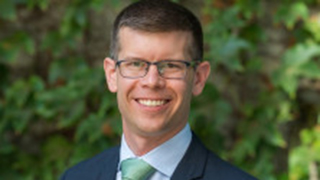
Patrick R Manning, Ph.D., Associate Professor of Pastoral Theology and Director of the Center for Catholic Studies
Patrick R Manning, Ph.D., associate professor of Pastoral Theology and director of the Seton Hall University Center for Catholic Studies, has released a new book, Be Still and Know: Contemplative Practices for Christian Schools and Educators.The book offers a timely and practical invitation for teachers, administrators and formation leaders who are hungry for a way to teach and live more peacefully, attentively and faithfully in an age of distraction. Echoing the Scriptural call, “Be still, and know that I am God” (Psalm 46:10), Manning’s book returns Christian education to a simple but demanding center: schools can become communities where people learn to rest in God and from that rest discover renewed clarity, presence and joy.
“Christian schools should be a place where educators and students alike find the resources and support needed to become transformed, vibrant, peaceful human beings and disciples,” Manning says. In Be Still and Know, he brings forward a constructive path toward that goal. Drawing on current research in psychology, neuroscience, education and spirituality, Manning explains that he presents the contemplative Christian tradition “as a viable resource for addressing all of these challenges while deepening the Catholic mission of the school.”
Manning’s approach is intentionally concrete and school-shaped. “The book walks readers through a school day in which they experience people, time, space and school activities in a more contemplative manner,” he says. In this way, contemplation is woven into the rhythm of the school day. Manning is candid about what is at stake. “I am convinced that schools like Seton Hall have the great potential to bring about a cultural transformation - to counteract the forces of distraction and dehumanization that dominate our culture today. I believe that these contemplative practices could be the key to that transformation.”
At the heart of the book is a simple understanding of contemplation. Manning describes it as “the practice of resting in God’s love,” a form of prayer that does not depend on effort or constant activity, but on learning how to be present with God. This posture of resting, he suggests, is not an escape from daily responsibilities, but a way of being formed from within, one that slowly reshapes attention, patience and care in everyday life.
When it comes to the book’s long-term impact, Manning speaks with both faith and realism. “God knows best, so I trust in the work of the Holy Spirit,” he says. “That being said, I hope the book will help people come to a deeper sense of God’s presence in their lives and a more abiding peace.” In a moment when many feel overwhelmed by the pace and scale of modern life, Manning argues that formation cannot remain only individual. “The ubiquity of digital technologies and the massive scope of the political, environmental and spiritual crises we face today can make us feel powerless as individuals,” he says. “We need strong communities to unite people in cultivating countercultural practices and ways of life. Our Catholic schools can be these kinds of communities, and I hope this book will contribute to that work.”
Building on this wider horizon, he is currently developing a follow-up project that traces how contemplative practices can take root in these settings, while actively exploring “how they can help us respond to the monumental changes effected by the proliferation of generative artificial intelligence, in ways that safeguard human flourishing.”
All of this work, he notes, is deeply connected to a lived community of practice at Seton Hall. “I dedicated this book to the Contemplative Pedagogy Fellows of Seton Hall,” Manning says. "This is a group of our faculty who for several years participated in a seminar focused on learning about and applying contemplative practices. It was one of the most beautiful experiences in my time at Seton Hall and inspired much of what I had to say in the book. We are fortunate to have a core of faculty at the university who are knowledgeable about such matters and committed to bringing a contemplative spirit to their teaching and their work here."
Categories: Campus Life, Education, Faith and Service