
Seton Hall Faculty Explore Augustine, Idolatry, Nationalism and Consumerism at Annual Summer Seminar
Wednesday, June 10, 2026

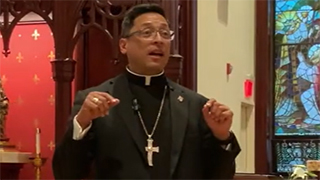
William T. Cavanaugh, Ph.D., professor of Catholic Studies and director of the Center for World Catholicism and Intercultural Theology at DePaul University.
Seton Hall University faculty gathered May 26-28 for the Center for Catholic Studies’ annual Faculty Summer Seminar, a three-day program designed to support faculty formation through sustained conversation, shared reading and engagement with the Catholic Intellectual Tradition.
This year’s seminar featured William T. Cavanaugh, Ph.D., professor of Catholic Studies and director of the Center for World Catholicism and Intercultural Theology at DePaul University. Cavanaugh led faculty through a theological exploration of idolatry as a lens for understanding modernity, with particular attention to nationalism, consumerism, Saint Augustine and Catholic social teaching.
The Faculty Summer Seminar is one of the Center’s signature faculty development programs and has long provided faculty with an opportunity to step away from the pace of the academic year, reflect together across disciplines and consider how the Catholic Intellectual Tradition can inform their teaching, scholarship and shared work at Seton Hall.
“It was a joy to be together with our excellent faculty and an expert presenter for these three days. Dr. Cavanaugh led our faculty into incredibly rich discussions of Scripture, Saint Augustine and Catholic social teaching as they relate to some of the most powerful forces shaping our society today,” said Patrick Manning, Ph.D., director of the Center for Catholic Studies.
DAY 1 – Idolatry as a Theological Lens for Understanding Modernity
During the first day of the seminar, Cavanaugh introduced idolatry as a theological
framework for interpreting modern life. He challenged the common assumption that modernity
is primarily marked by secularization or disenchantment, arguing instead that worship
does not disappear; it is redirected toward created things. Drawing on Max Weber,
Émile Durkheim, Charles Taylor and biblical traditions of idolatry critique, Cavanaugh
invited faculty to consider how modern forms of devotion can attach themselves to
political, economic and cultural realities.
A central theme of the first day was the idea that human beings remain worshiping creatures, even in a supposedly secular age. Cavanaugh emphasized that the question is not simply whether people worship but what they worship and how that worship shapes their lives. Faculty explored how the Bible’s critique of idolatry blurs familiar boundaries between religion, politics and economics, and how it often functions as self-critique rather than condemnation of others.
The discussion also highlighted the sympathetic dimension of idolatry critique. Cavanaugh noted that people are often drawn to created things because they are beautiful and because human beings desire to find God through the world. The theological challenge, he suggested, is learning how to find God in things without making a god of things.
DAY 2 – Nationalism, Christian Identity and the Church as Community of Discernment
On the second day, faculty turned to nationalism as a powerful modern form of idolatry.
Cavanaugh described nationalism as a form of collective devotion that can call forth
real virtues, including sacrifice and loyalty, while also becoming idolatrous when
the nation is treated as an ultimate object of allegiance.
Cavanaugh distinguished between religious nationalism, in which religious language
and national symbols become blended, and nationalism itself functioning as a kind
of religion. He argued that nationalism becomes especially dangerous when it demands
sacrifice, identifies enemies and asks people to kill or die on behalf of the state.
This led faculty into a wide-ranging discussion of Christian responsibility, just
war theory and the need for moral discernment rooted in the Church rather than delegated
entirely to national authorities.
The day’s conversation also examined the difference between patriotism and nationalism, the formation of national identity and the pressures that can make Christians identify more strongly with political or national communities than with the Church. Faculty considered how Catholic social thought and ecclesiology can help recover the Church as a primary community of discernment, especially when confronting questions of violence, allegiance and the common good.
DAY 3 – Consumerism, Material Culture and Practices of Resistance
The final day focused on consumerism and the ways modern economic life can shape desire,
identity and community. Cavanaugh emphasized that material culture is not inherently
problematic; human beings need things, create things and communicate through material
reality. The issue, he argued, is the way consumer capitalism can transform relationships
among people, products and creation.
Faculty discussed how consumerism can function as idolatry through practices that obscure the labor, communities and ecological costs behind goods. Cavanaugh traced the evolution of advertising, branding and consumer culture, showing how products can become detached from their material and social origins and invested with symbolic power. The conversation also considered how people themselves can become commodified in a culture of branding, surveillance capitalism and market-driven self-presentation.
The seminar concluded with a theological response grounded in the Incarnation, the Eucharist and Catholic social teaching. Cavanaugh invited faculty to consider practices that can repersonalize economic life, including support for local businesses, fair trade, worker-centered economic models, political action for labor and intentional habits of restraint. Participants also discussed classroom practices that help students examine consumer culture, technology, attention and the common good.
For faculty participants, the seminar offered both intellectual enrichment and practical resources for teaching and scholarship.
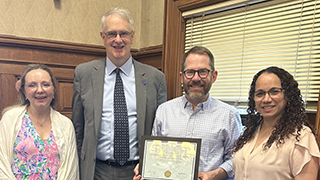
“Dr. Cavanaugh’s seminar connected helpful readings of St. Augustine to the concerns of our time, specifically nationalism and consumerism. This seminar is going to enrich my teaching and scholarship,” said Elizabeth Brewer Redwine, Ph.D., senior lecturer in the Department of English.
Looking Forward
The annual Faculty Summer Seminar advances the Center’s mission to support Seton Hall’s
Catholic identity by creating opportunities for faculty to engage the Catholic Intellectual
Tradition in community. The Center will continue to offer programs that invite faculty,
students and the broader University community to live, share and deepen Catholic identity
at Seton Hall.
For more information about the Faculty Summer Seminar or similar programming, please contact [email protected].
Categories: Faith and Service